
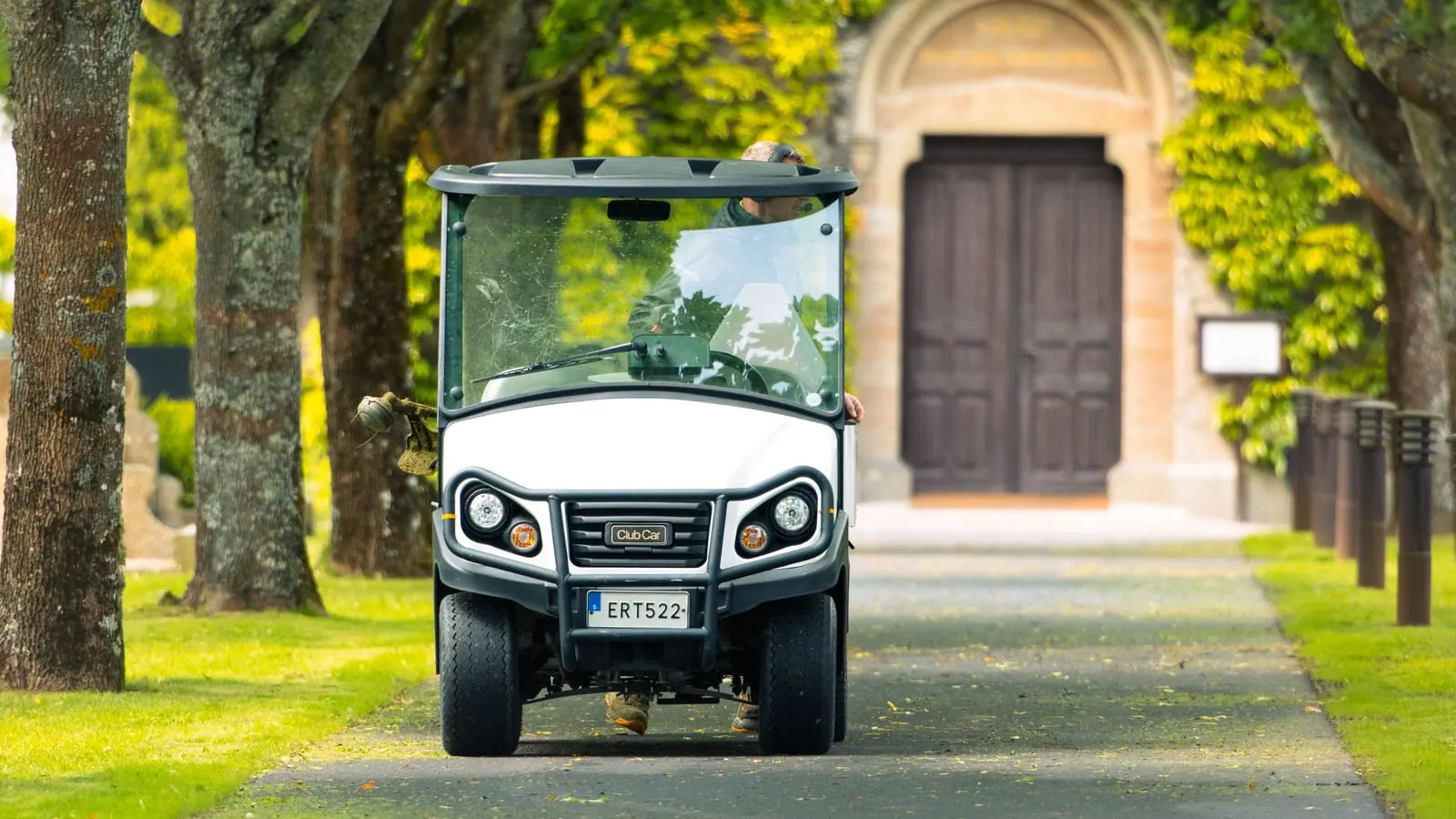
Street Legal Golf Carts
Road-legal carts are a vehicle class of their own. Here's what separates an LSV from a standard golf cart — and how to get one configured for where you live.
Golf cart or LSV? The distinction that decides everything
A standard golf cart tops out around 15–20 mph and is built for private property and designated paths. A Low Speed Vehicle (LSV) is a federally recognised vehicle class: it must exceed 20 mph but not 25 mph, meet federal safety standards, and carry a VIN — which is what lets it be registered, insured and driven on public roads posted at 35 mph or less in most states.
Not every golf cart can become an LSV, and fitting lights to a cart does not make it one. The full breakdown is in our guide to street legal golf cart requirements.
What a road-legal cart has to carry
- DOT-approved headlamps and tail lamps
- Brake lights and turn signals
- Reflex reflectors
- Windshield and rearview mirror
- Seat belts at every seating position
- Parking brake and horn
- A 17-digit VIN
Registration, insurance and licence requirements are set state by state, and all 50 states prohibit LSV operation on highways and interstates. Always confirm the rules for your state and county before you drive on public roads.
Which of our carts can be street legal?
Some models are designed to meet LSV regulations, allowing operation on public roads with posted limits of 35 mph or less in most states. Because requirements vary by state — and because the right configuration depends on where you'll register the cart — tell us your state and how you plan to use it, and we'll confirm exactly which models qualify and what they need.